
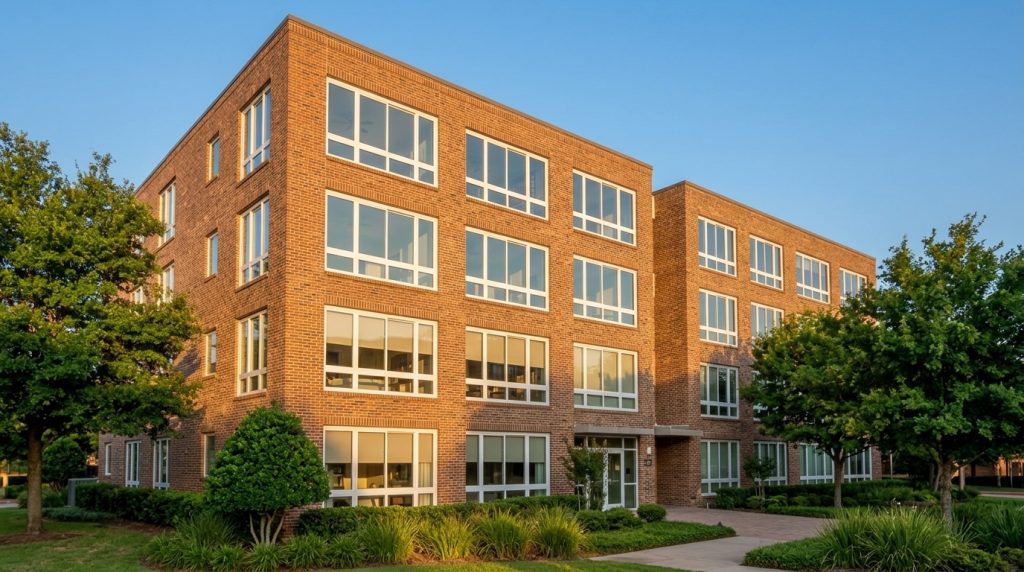
The Problem With Apartment Windows That Nobody Talks About
Most multifamily buildings in the Houston area were not built with energy performance in mind. They were built to a code minimum, with aluminum-framed single-pane windows that passed inspection and kept construction costs down. And for decades, that was good enough.
It isn’t anymore.
Energy costs have climbed. Tenants are more educated about comfort and more willing to leave a unit that drafts in summer or lets noise pour in from the street. And property managers are caught between the cost of doing nothing and the staggering expense of a full window replacement program across an entire building.
Window inserts for apartment buildings sit squarely in the middle of that problem. They’re the option most property managers haven’t seriously considered yet, and in our experience, that’s a missed opportunity.
What Interior Window Inserts Actually Are
Let’s clear this up because there’s a lot of confusion in the market. Interior window inserts, also called interior window insulation panels or secondary glazing, are custom-fit panels that install on the interior side of your existing windows. They don’t touch the exterior glass. They don’t require permits in most jurisdictions. And they don’t require tenants to vacate.
The panel creates a sealed air gap between the existing window glass and the new interior layer. That air gap is what insulates. It’s the same principle behind double-pane glass, just applied from the inside, which means your existing windows stay in place.
For a property manager running a 50-unit building, the contrast with full window replacement is dramatic. A window replacement program across 50 units could easily run $300,000 to $600,000 or more depending on window count and size. You’re talking coordinating with dozens of tenants, managing installation crews on multiple floors, and dealing with weeks of disruption.
Interior insulation panels are a different kind of project entirely. Installation is fast. Units stay occupied. And the cost profile is a fraction of replacement.
The Energy Cost Reality for Multifamily Buildings
Here’s a number worth sitting with. The U.S. Energy Information Administration reports that windows account for 25 to 30 percent of heating and cooling energy use in commercial and multifamily buildings. In a Houston-area building with aluminum-framed single-pane windows, that number is probably on the high end.
For a property with common-area utilities billed to the owner, that’s a direct operating cost. For individual units where tenants pay their own utilities, it’s a factor in lease renewals. Tenants who feel a building is inefficient and uncomfortable don’t always complain. They just don’t renew.
We’ve worked with commercial property owners across Harris County who didn’t initially connect their tenant turnover rate to window performance. But when rooms are drafty in winter, overheat in summer, and let street noise in year-round, the quality-of-life impact is real. Window inserts for apartment buildings address all three of those problems at once.
I’ve walked through buildings where the corridor windows hadn’t been touched since the 1970s. You can feel the heat radiating off the glass in July. That heat load is going somewhere, and it’s either costing the building owner in HVAC operating costs or making tenants miserable.
Why Historic and Older Apartment Stock Is a Special Case
This matters more in some neighborhoods than others. Midtown Houston, the Heights, Montrose, and parts of Galveston have older multifamily stock that may carry historic designation or simply have original wood-framed windows that can’t be replaced without compromising the building’s character or triggering preservation review.
For those properties, interior window insulation panels are not just the practical choice. They may be the only compliant choice.
Our historic window preservation work is something we take seriously. Keeping original windows intact while dramatically improving their thermal and acoustic performance is exactly what secondary glazing was designed to do. It’s a solution that satisfies both the preservation officer and the property owner’s energy goals.
The Secretary of the Interior’s Standards for Rehabilitation, which govern most historic property work, generally support interior secondary glazing as an acceptable treatment for energy upgrades because it’s reversible and doesn’t alter the historic material. That’s a critical distinction for any property manager dealing with a landmarked or contributing-structure building.
Noise Is the Other Half of the Conversation
Energy performance gets most of the attention, but noise is often what actually drives the decision for apartment owners.
In the Houston metro, multifamily buildings deal with traffic noise on major corridors, proximity to rail lines, freeway sound walls that still don’t eliminate all noise, and in some submarkets, industrial sound from nearby facilities. A single-pane aluminum window does essentially nothing to stop that noise.
Interior window insulation panels add a second layer of glass or acrylic that, combined with the air gap, creates meaningful acoustic attenuation. The dead-air space between the original window and the insert acts as a sound buffer. Research on secondary glazing acoustic performance consistently shows reductions in transmitted noise, with the size of the air gap being a key variable.
For property managers, this is a selling point. A quieter unit is a more rentable unit. And in a competitive Houston leasing market, comfort details matter.
How the Installation Process Works for Occupied Buildings
This is where the practical advantage really shows. Our panels are custom-fabricated to fit each window opening. Installation is typically completed per unit in a matter of hours. Tenants don’t need to leave. There’s no demolition, no drywall repair, no exterior scaffolding.
We schedule around the property’s needs. Common areas, corridors, and management offices can be done first if the owner wants to evaluate performance before rolling out to all units. That kind of phased approach makes budgeting easier and gives ownership real performance data before committing to a full building program.
The magnetic frame system we use allows panels to be removed easily for cleaning and reinstalled. That’s an important operational point for property management teams who need solutions that tenants can actually live with long-term.
If you manage a multifamily property in the Houston, Katy, La Porte, or Deer Park area and you’ve been watching energy costs climb without a clear path forward, this is the conversation worth having. Visit our commercial window solutions page or reach out directly and we’ll put together an honest assessment of what interior window inserts could do for your building.